Corten steel is a weathering steel that develops a protective surface patina under suitable conditions. Its brown colour and textured finish make it a distinctive choice for planters. Before ordering, however, it helps to look beyond the appearance: the installation location, water drainage and the construction of the finished container all matter.
This guide explains the COR-TEN® name, how weathering steel differs from ordinary steel and what to ask a planter manufacturer. It also sets out the information needed for a useful quotation, so that different proposals can be compared on the same basis.
What corten steel means
In everyday use, corten often describes weathering steel with a rust-brown surface. COR-TEN® is a registered trademark. Ask for the material designation, manufacturer and supporting material documentation rather than relying on the word corten alone in a catalogue. A description of the finish is not a full material specification.
We use SSAB COR-TEN® steel for our planters. The steel thickness, overall dimensions and base arrangement should still be agreed separately for each order. The material name does not determine those details. Two containers that look similar in a photograph may have different intended uses and include different work or components in their quoted price.
How the protective patina develops
Alternating wet and dry conditions help weathering steel develop a dense oxide layer that slows further corrosion. SSAB’s design guidance stresses the importance of water draining away and the surface being able to dry. A location that remains damp needs individual consideration rather than an assumption that every outdoor position is suitable.
For a planter buyer, the practical step is to show the proposed location before confirming the order. Mention a roof overhang, irrigation, water running from the building or an area where rain collects. These details help define the specification. They are more useful at this stage than trying to match the appearance of a single photograph.
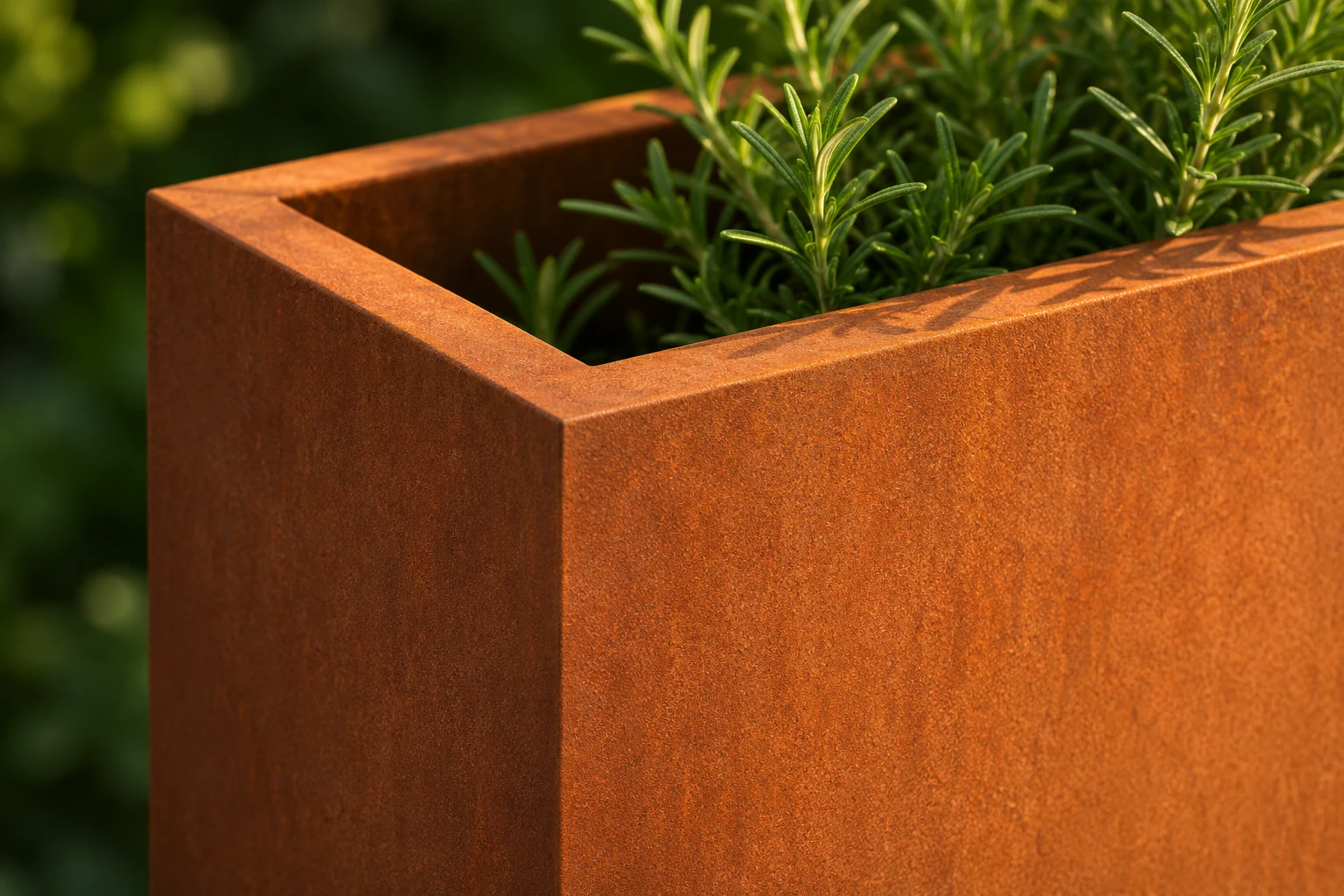
Corten versus ordinary mild steel
Ordinary unprotected mild steel does not develop the same protective surface for which weathering steel is selected. If you are considering a painted planter, compare the complete specification: steel, preparation, coating and maintenance arrangements. The initial price of an empty metal body is only part of that comparison.
Corten suits a design that calls for the natural brown appearance of weathered metal. A painted product suits a different brief when a particular colour from a palette is important. The decision depends on the intended finish and location. It is more useful to define those requirements than to treat either material as universally better for every planter and every project.
| Criterion | Corten planter | Painted steel planter |
|---|---|---|
| Surface appearance | Natural patina colour | Coating colour and texture as specified |
| Details to agree | Material, surface condition and water runoff | Metal preparation, coating system and care |
| Indoor use | Inner container and floor protection | Inner container and floor protection |
| Price comparison | Matching dimensions, base and included components | Matching dimensions, base and included components |
Where corten belongs in a design
Weathering steel is used in architecture and landscape design. Here, the focus is on planters: a standalone container at an entrance, planting along a terrace or a metal body used around an indoor planting container. Other architectural applications do not mean that every finished product follows the same installation requirements.
For a terrace, start with the furniture layout and routes through the space. At an entrance, check the door swing and access for cleaning. For a longer planting arrangement, compare one continuous planter with several shorter units. A measured plan makes those options easier to judge than individual images, because it shows how the containers will actually relate to the surrounding space.
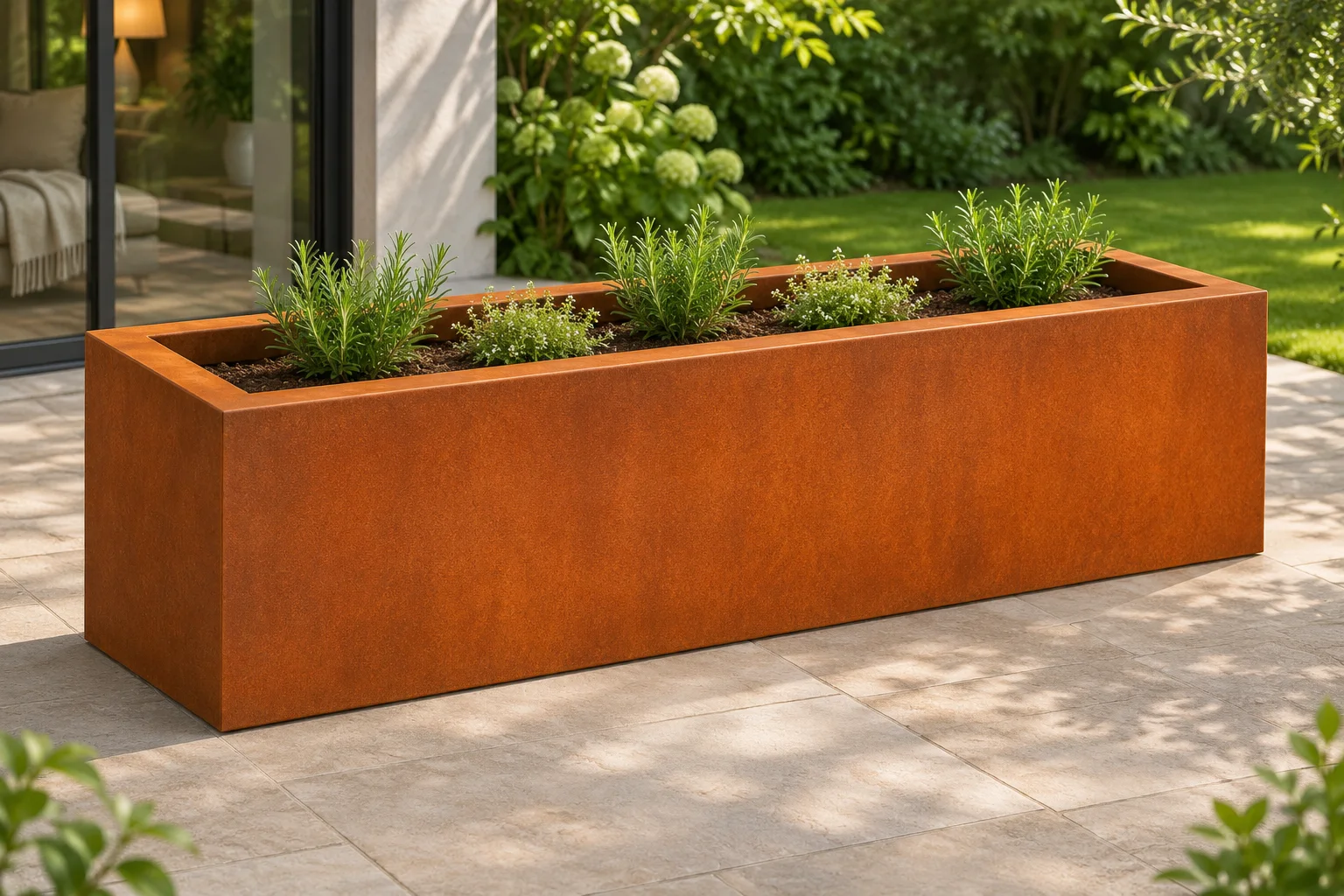
Why a photograph is not an exact colour sample
Corten’s appearance changes as the surface weathers. Light and moisture also affect how the metal looks in a photograph. An image is useful for understanding shape and the general character of the finish, but it cannot guarantee an exact colour match between a completed order and a screen.
If the planter will sit beside stone, timber or a particular facade finish, discuss that setting before ordering. Daylight photographs of the surroundings are helpful. Ask what condition the surface will be in at handover. If several planters form one composition, also agree how their preparation and installation will be coordinated rather than assuming that separate orders will look identical.
Runoff and light-coloured paving
During the early stages of patina formation, water running from weathering steel can appear brown. Near light-coloured paving, plan the route of runoff and protection for neighbouring surfaces in advance. Choosing weathering steel does not remove the need for careful detailing around the finished planter.
Discuss water from both rainfall and plant watering: they may follow different routes. Tell the manufacturer whether the container will stand on soil, stone, tiles or decking. Where the planter forms part of a landscape project, give that information to the designer or installer before paving work is finished. Resolving the arrangement early is easier than treating the container and its surroundings as separate decisions.
Using corten planters indoors
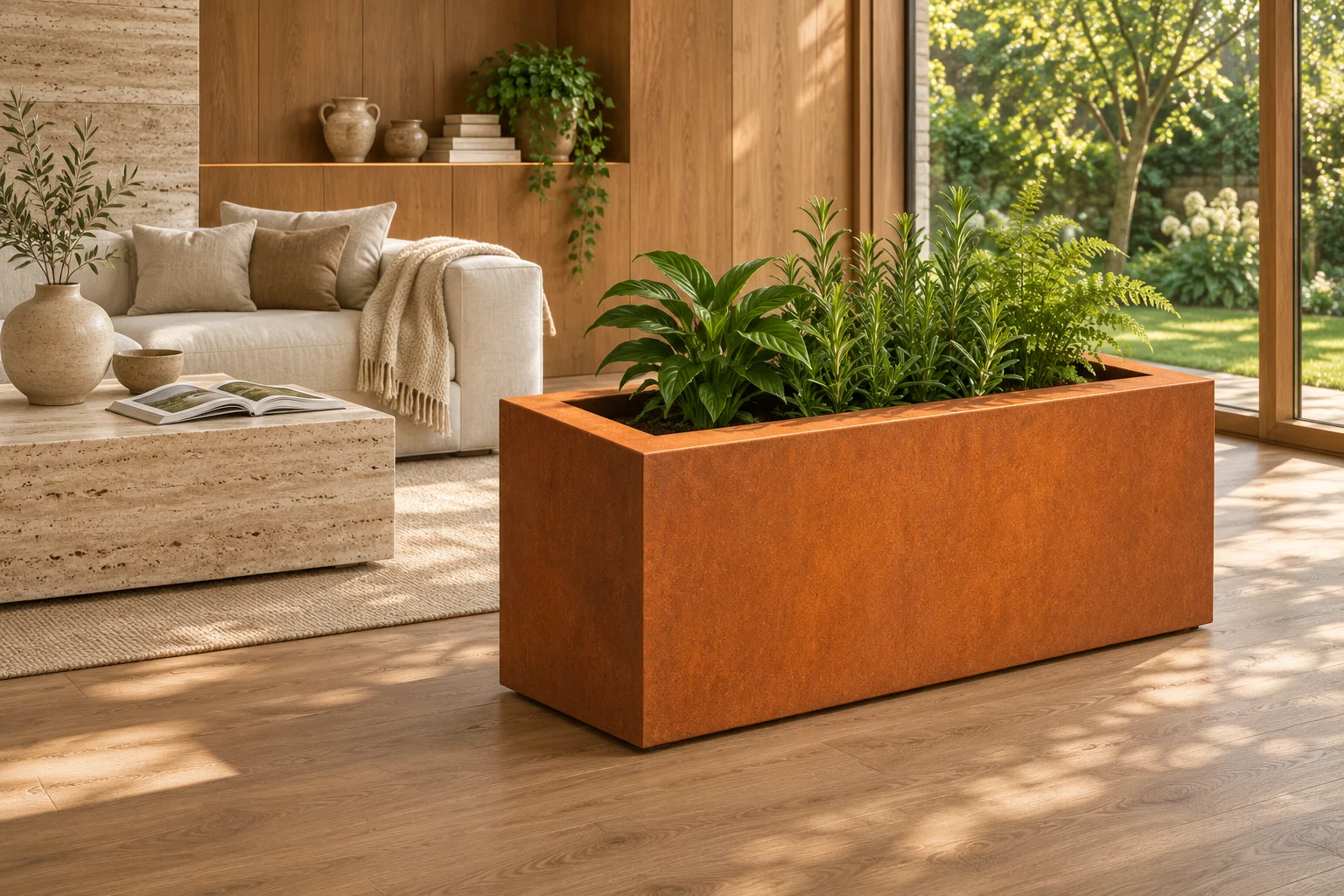
Indoor use calls for an agreed inner container, a watering method and protection for the floor. An outdoor planter with drainage holes should not simply be moved into a living room without reconsidering these details. The visible body and the way the plant is maintained need to work together.
Decide whether the plant will stay in a separate pot and how that pot can be removed for care. Measure an existing container if you already have one. For a reception area, restaurant or office, discuss access with the person responsible for the plants. The enquiry form on this site lets you specify indoor installation, so the location can be considered from the start.
What to compare before ordering
Compare quotations with the same external dimensions and the same included work. Clarify the material, thickness, base construction, inner container and surface condition. Without those details, a price difference may reflect a different specification rather than a difference in workmanship or the cost of producing the same item.
The standard range includes rectangular planters from 800 to 2000 mm long, plus square models measuring 400 × 400 × 400 and 400 × 400 × 700 mm. Custom dimensions can also be agreed. External body height is not the same as planting depth, so discuss the planting plan and internal arrangement together. Dimensions alone do not establish the suitability of a particular plant.
Getting a useful quotation
Send a model choice or length, width and height in millimetres, together with the quantity and installation location. Add a photograph or describe the surface beneath the planter. If plants or planting containers have already been selected, include their dimensions. This gives the discussion a clear starting point without asking the manufacturer to guess the missing details.
Production takes 1–3 days depending on the dimensions and order volume, with the actual lead time confirmed once the specification is agreed. Delivery time is separate. Use the model links below to request a quotation, or open the enquiry form and describe the custom dimensions needed for your space.
Sources and further reading
Need a planter for your project?
Choose a model or specify your own dimensions. Include the quantity and installation location in your enquiry.
Get a quote