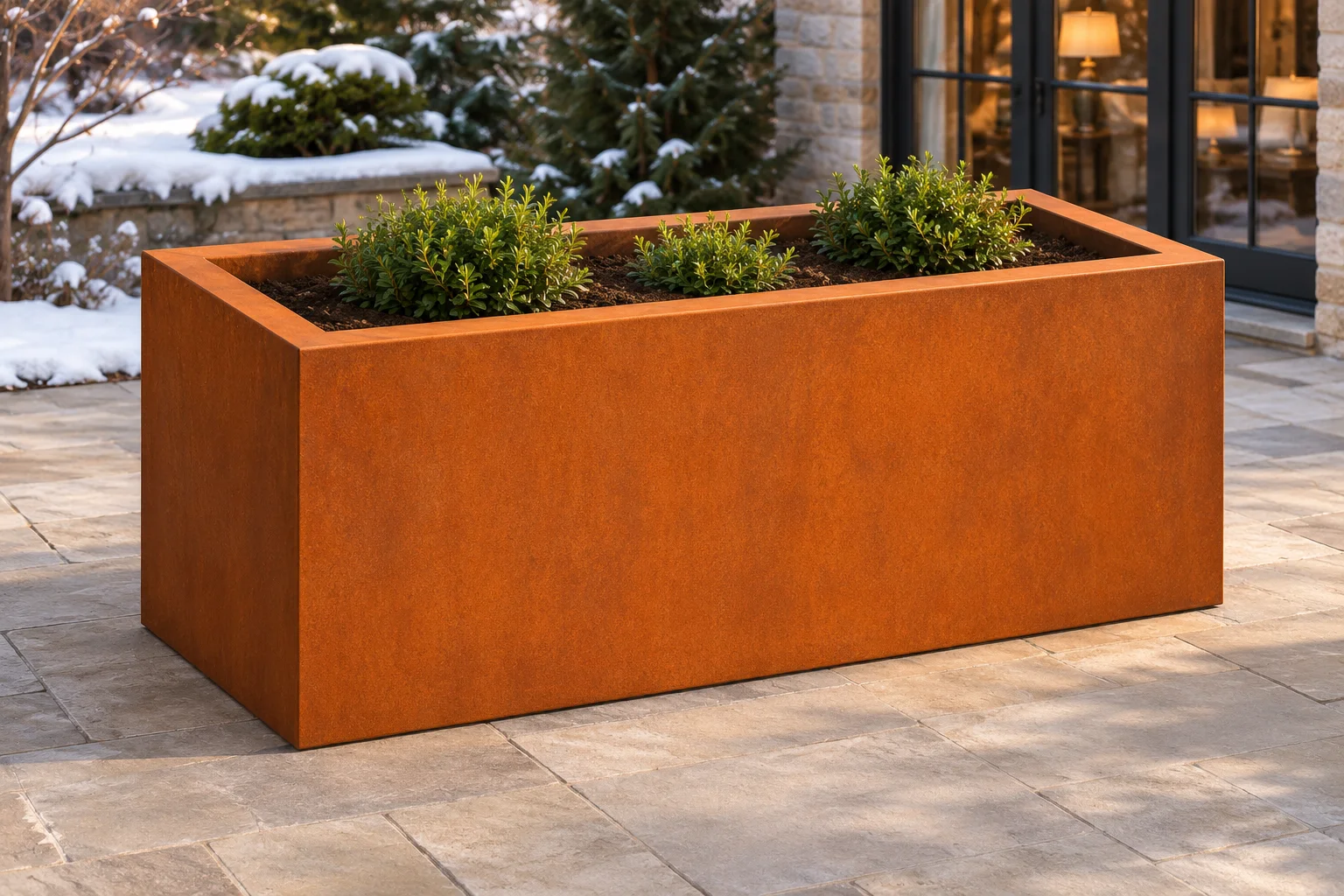
A corten planter does not replace winter protection for its plants. Before frost, check three things separately: whether the selected species can overwinter in a container in your region, whether excess water leaves the planting container and whether moisture collects against the metal body. Attractive patina cannot compensate for a failure in any of these areas.
Prepare before the growing medium freezes. You can still check drainage, agree insulation and relocate a small plant without handling a frozen root ball. For a large filled planter, plan overwintering in place or agree movement in advance. Do not assume it can easily be repositioned after the first hard frost.
Why a hardy plant needs separate assessment in a planter
Growing in the ground and above ground exposes roots to different conditions. A container separates the root system from surrounding soil; protection depends on location, planting volume and insulation. The RHS specifically highlights the vulnerability of container-grown and evergreen plants. A “frost-hardy variety” label does not guarantee success in every planter.
Ask the nursery whether the actual species and cultivar suit container overwintering in your region. Explain whether the site is an open terrace, courtyard or sheltered position beneath a canopy. For newly planted specimens, discuss planting date and root establishment separately. Advice for an established shrub in a garden should not automatically be applied to a new plant in a small inner container.
Start with drainage rather than insulation
After rain or moderate test watering, inspect accessible water outlets. Clear leaves and debris obstructing them externally, then check the onward runoff route across the paving. Body drainage holes cannot help if water remains trapped in an inner pot or an outlet is blocked by a tray. Inspect the whole planting system rather than one visible component.
| What to assess | Required decision | What it does not replace |
|---|---|---|
| Plant | An overwintering plan for the species and region | A frost-hardy label alone is not enough |
| Planting container | Drainage, moisture monitoring and insulation | Insulation cannot fix a blocked water outlet |
| Corten body | Avoid persistent wet contact and salt | Patina is not insulation for roots |
| Installation site | Wind shelter and a clear runoff route | A canopy does not establish a watering regime |
Water needs an exit without continually backing up against the steel. AHDB’s container overwintering guidance emphasises growing-medium structure and good drainage. This is not a reason to dismantle an established planting at random immediately before frost. If the medium remains waterlogged, agree action with a planting professional. An additional outer covering does not remove the cause of standing water.
Choose shelter without creating hidden wet contact
Protection from wind and protection from roof runoff are different tasks. A position against a wall may be calmer while receiving continual discharge from a canopy. Observe the site during rainfall: where water flows, where wind carries it and whether the base remains accessible for inspection. Do not push the planter into a position that conceals wet contact against a wall.
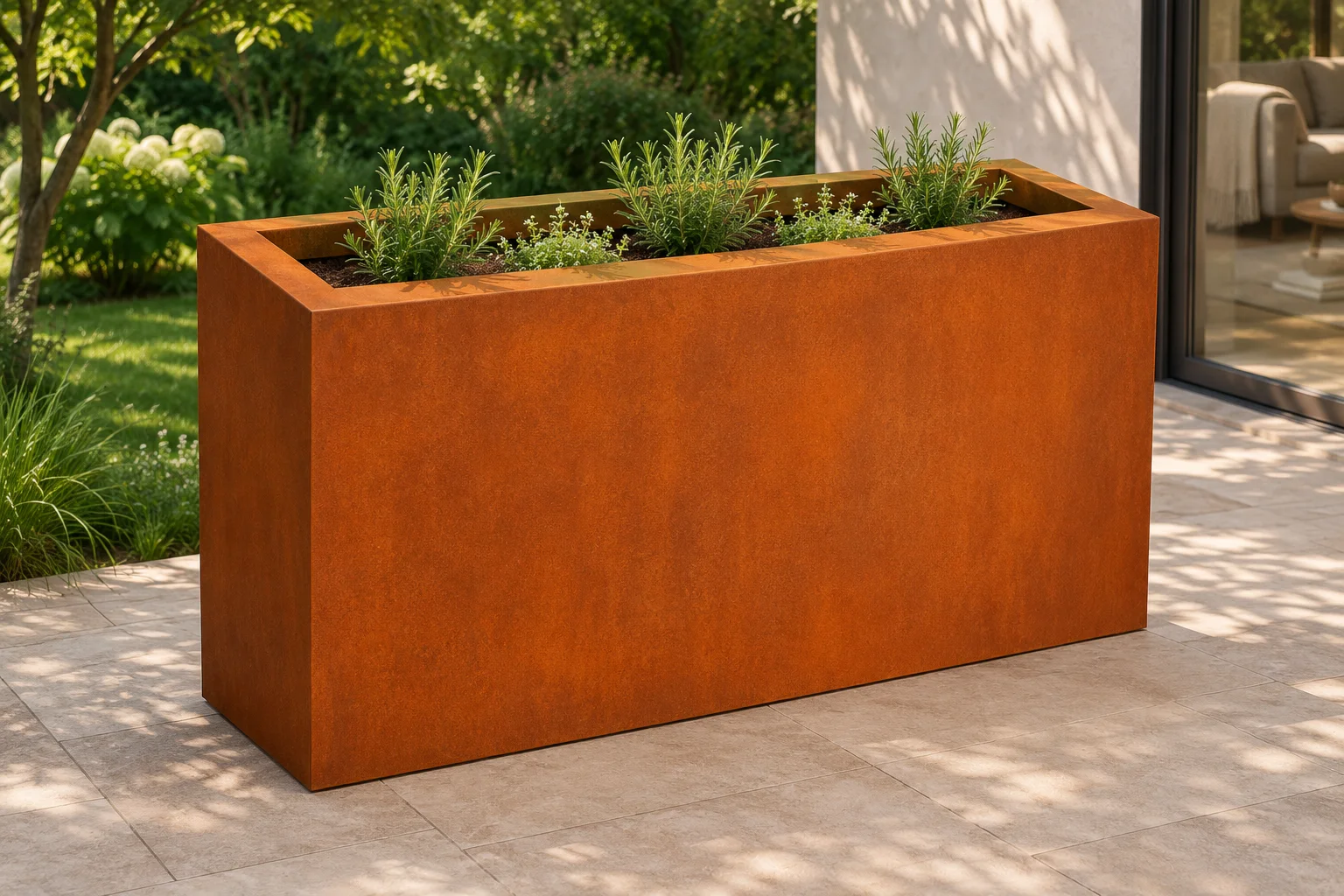
Small planting pots may sometimes be grouped or moved to an agreed sheltered location. Decide the approach for a large composition before filling its body. Bringing every outdoor plant into a heated room is not a universal overwintering method: temperature and lighting requirements depend on the species. Request a specific care plan rather than simply advice to “take it out of the frost”.
Protect roots without wrapping the steel in a wet shell
The RHS recommends insulating container roots and using protective coverings where appropriate for the plants. In a corten arrangement, separate protection of the planting container from the conditions required by the metal. SSAB cautions against prolonged weathering-steel contact with moisture, soil and wet materials. A tight, persistently wet wrapping around the whole body can conflict with that principle.
Where an inner container is included, discuss insulation around it, inspection access and an unobstructed water exit. Do not block drainage or conceal places where moisture can collect. Insulation type and thickness depend on the plant, local conditions and construction. No single wrapping guarantees successful overwintering for every plant throughout Ukraine.
Winter watering: check conditions, not the summer calendar
University of Illinois Extension notes that container-grown plants, including evergreens, need moisture monitoring during winter. Beneath a canopy, growing medium may receive no precipitation even when the surroundings are wet or snowy. The terrace’s appearance does not establish moisture inside the planting. Equally, permanently saturated medium is not the objective of winter care.
Agree moisture checks and watering for the actual plant, allowing for temperature and the medium’s condition. Do not attempt to compensate for drying with a single heavy watering of a frozen container. If irrigation is installed, ask its supplier about seasonal shutdown or specified winter operation. After changing settings, check that water is not entering an inaccessible space beneath the inner pot.
Why a large planter is not automatically “warm”
Outside dimensions do not equal root-zone volume. A 2000 × 1000 × 800 mm model may contain separate planting containers; a compact 800 × 300 × 400 mm model has different proportions and planting arrangements. Compare actual internal dimensions, base position and insulation space. Do not infer winter suitability from an appealing silhouette or wall height.
Corten itself is not root insulation. Select the body material for its steel properties and appearance, then determine the plant’s winter regime separately. State before ordering if planting will remain year-round. You can then discuss the inner container, maintenance and root-zone protection without treating the external form as a promise of plant survival.
Salt, snow and cleaning around the planter
Plan snow clearing so that material from a de-iced path is not piled against the body. SSAB specifically cautions against salt-rich environments. If snow is regularly cleared nearby or steps are treated with de-icer, disclose this before choosing the position. Safe circulation and steel protection need a coordinated solution, rather than solving one problem by creating another.
After a thaw, check drainage outlets, areas beneath supports and adjacent paving. Meltwater may reveal a runoff route that was not apparent in autumn. Do not chip ice blindly around concealed components; establish the construction and the cause of collected water first. Photograph unusual marks and discuss them with the fabricator or maintenance professional.
What to prepare for year-round planting
Keep a short record of the arrangement: plant species, planting-container dimensions, drainage layout, agreed insulation and installation position. Include the person responsible for inspections during frost and thaw periods. For an office or restaurant, maintenance should not depend on an informal conversation with a single employee who might be away.
For an order, send site photographs, outside dimensions in millimetres, quantity and the requirement to overwinter in place. For example: “Two planters along an exposed terrace, year-round plants, access to inner containers and drainage required.” First agree the plants and their care regime, then specify construction to meet those needs. That is more useful than an unsupported promise that any metal planter and its planting will survive any winter.
Sources and further reading
Need a planter for your project?
Choose a model or specify your own dimensions. Include the quantity and installation location in your enquiry.
Get a quote